Saturday, December 10, 2022

France into World Cup semis as England miss late penalty

France into World Cup semis as England miss late penalty


France are now one win away from becoming the first back-to-back finalists since Brazil in 2002 and two from being the third team to retain the trophy after Brazil in 1962 and Italy in 1938.

Manager Didier Deschamps, who captained them to their first World Cup triumph in 1998 and coached them to their second title four years ago, described the victory as fabulous.

"It was a big game, we played a superb England team who are strong technically and physically," he said

"It's brilliant for the players to be in the last four again. We got a bit lucky although we gave away two penalties we kept our lead with our hearts and our guts."

France really did have to work hard for their win as the first major tournament knockout match between the old sporting rivals maintained the excitement and edge-of-the-seat drama that made it such an extraordinary quarter-final weekend.


PENALTY MISS


England was then given another lifeline via VAR when Theo Hernandez flattened Mason Mount but this time Kane sent his spot kick wildly over the bar in a painful reminder of Chris Waddle's effort when they lost the 1990 semi-final shootout to West Germany.

England pushed for an equalizer but when substitute Marcus Rashford's added-time free kick fizzed just over the bar it meant a seventh defeat in 10 World Cup quarter-finals and another 'four years of hurt' to tack on since their solitary triumph in 1966.

"We were here to try to win the tournament and we believed we could and I think that we showed with that performance tonight against the reigning champions that we've got a team that could have done that," said coach Gareth Southgate.

"It's fine margins and things at both ends that have ended up deciding the game but I think the way they've progressed as a group throughout this tournament has been fantastic."

France now faces the unlikeliest of semi-final opponents in Morocco, after they beat Portugal 1-0 earlier on Saturday and Deschamps was quick to recognize their worth.

"Morocco deserves praise," he said. "Maybe they were not expected to be here (in the semis), but they conceded only one goal, and seeing them here is not a surprise at all."

More News: thefinancialexpress-bd


Wednesday, July 14, 2021

She wants Jennifer Lopez's body, Shilpa Shetty says

She wants Jennifer Lopez's body, Shilpa Shetty says


Shilpa Shetty has said that like everyone else, she too has people she looks up to for beauty goals. She said that she wants a body like Jennifer Lopez's, and would like to look her best at the age of 65.

Actor Shilpa Shetty, who is set to make an acting comeback after more than a decade, has said that even she has people she looks up to for beauty goals. She said that she would like to have Jennifer Lopez's body.


Shilpa Shetty was asked about the compliments she receives for her appearance at 46. She admitted that she gets complimented a lot, but noted that it requires effort.

She told The Quint, "I will not deny it. I will accept that many people say this. Aur main appreciate karti hu ke yeh acknowledge karte hain ke mehnat jaari hai (And I appreciate that the effort is acknowledged). I feel like when they acknowledge, it seems like the yoga worked."

She said that after the birth of her first child, Viaan, she put on 32 kgs. "I just let go of myself. Main paagal ho gayi thi, main sab kuch kha rahi thi, mujhe toh reason chahiye tha khaane ke liye (I went mad, I would eat everything, I didn't need a reason to eat). Toh maine ek din realise kiya ke bhaiya maine bohot saara weight put on kar liya hai (One day I realised that I'd put on a lot of weight). So I'm also like you guys, it's not like it comes naturally. So if I were not to take care of myselg, if I was not disciplined, I would also put on weight. I prioritise what is important, what is not, and I live by yogic principles. I want to have JLo's body! We all have benchmarks. She's 52 I think, and that's amazing. I mean, look at that! There are people who inspire me, too. And I want to be my best when I'm 65," she said.


Saturday, December 24, 2016

10 Top most favorite science news stories of 2016

10 Top most favorite science news stories of 2016


Plants that gamble. Floating creatures in the clouds of alien worlds. An ice-encased military base uncovered by climate change. Our favorite stories of 2016 didn’t necessarily employ the most cutting-edge science—for that, see our breakthroughs of the year—but they were fun, compelling reads that resonated widely with our audience here and on social media. Some of these were our personal favorites; some were our most popular stories of the year. Either way, we hope you’ll enjoy reading them again.

10. 'Undead' genes come alive days after life ends


Image: Dead animal.

Is death really the end? Not for some genes. This spooky story revealed that hundreds of genes turn on after an animal dies—and many are still active days after death. Even more disturbing, some of these genes are involved in sculpting a developing embryo.

9. Some fairy tales may be 6000 years old


Image: Some fairy tales may be 6000 years old.

Fairy tales existed long before the Brothers Grimm came around, but even literary scholars may be shocked by just how old some of our favorite stories are. Using methods typically employed by biologists to trace the evolutionary history of species, researchers found that some of the first fairy tales may have originated between 2500 and 6000 years ago. The key to a yarn’s longevity? A story that’s strange enough to be remembered, but not so strange as to defy comprehension.

8. Greenland shark may live 400 years, smashing longevity record


Image: Greenland shark may live 400 years, smashing longevity record

 “Astonishing.” That’s what scientists are saying about the life span of the Greenland shark, which new research reveals can live more than 400 years. The downside? Females aren’t ready to reproduce until they hit the ripe age of 156.

7. Plants can gamble, according to study


Image:  Plants can gamble, according to study

People do it. So do the birds and the bees. And now it appears that plants do it, too. Get your mind out of the gutter—we mean gambling. Our leafy friends, it turns out, roll the dice when it comes to making a tough decision such as where to find nutrients in uncertain circumstances. The findings need more testing, however, so don’t bring your favorite shrub to Las Vegas, Nevada, just yet.

6. Alien life could feed on cosmic rays


Image: Alien life could feed on cosmic rays

All life on Earth gets its energy either from the sun or by consuming organisms that do so. But would alien life do the same? A bizarre microbe found deep in a South African gold mine that gets energy from radioactive uranium suggests that life on other planets could feed off of this source as well, especially cosmic radiation raining down from space. In a somewhat related story—and one of our other favorites of the year—scientists found that alien life could thrive in the clouds of failed stars.

5. Humans are still evolving—and we can watch it happen


Image: Humans are still evolving—and we can watch it happen

Evolution doesn’t just happen over millions of years—it can occur right before our eyes. Such is the case in humans, where genes for height and eye color have evolved relatively rapidly—and a gene that favors cigarette smoking has dwindled in just a single generation.

4. You could probably have outrun a T. rex


Image: You could probably have outrun a T. rex

The Jurassic Park movies have made us fear dinosaurs all over again, but just how threatening was the infamous Tyrannosaurus rex? This story, concerning 66-million-year-old tracks found along an ancient shoreline in Wyoming, reveals that the beast may not have been able to run faster than 8 kilometers (or 5 miles) per hour. That’s slower than a middle-aged power walker, so with a bit of spring in your step, you probably could have avoided becoming a dino’s dinner.

3. Why did a humpback whale just save this seal's life?


Image: Why did a humpback whale just save this seal's life?

Nature may be red in tooth and claw, but sometimes species show a softer side toward each other. Our favorite example from this year was the remarkable story of a humpback whale that saved a seal from a pack of killer whales. Scientists aren’t sure why it happened, but at the very least they say it should make killer whales think twice about hunting when a humpback is nearby.

2. Mysterious, ice-buried Cold War military base may be unearthed by climate change


Image: Mysterious, ice-buried Cold War military base may be unearthed by climate change​

A military operation hidden beneath the Greenland Ice Sheet. A covert plan known as Project Iceworm. Rising international tensions. These may sound like the ingredients for a James Bond movie, but they’re the real-life details of a Cold War base known as Camp Century. And now a warming world may be bringing them all to light.

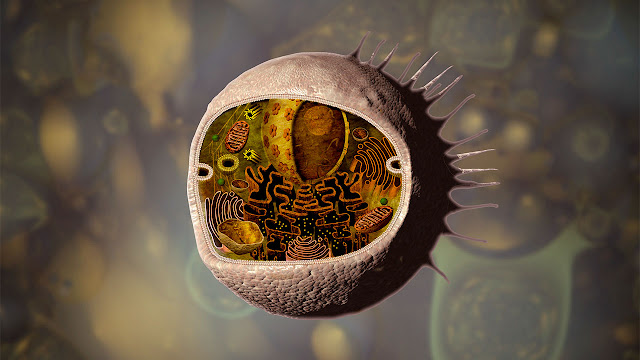
1. Why do our cell's power plants have their own DNA?


Image: Why do our cell's power plants have their own DNA?

Our most popular story of the year addresses one of the biggest mysteries of cell biology: Why do mitochondria—the oval-shaped structures that power our cells—have their own DNA, especially when the rest of the cell contains plenty of its own? A new study may hold the answers—and the clues to several rare and crippling diseases.

News Source : live-news24

Sunday, December 18, 2016

N Korea developing long-distance drone; Pentagon thinks as alarm

N Korea developing long-distance drone; Pentagon thinks as alarm


North Korea as it is known as a belligerent nation that defies the mightiest power in the world - the USA, now focuses on developing a long-endurance aerial drone with greater capabilities, South Korean media reports Sunday.

The Yonhap news agency said with advanced means of technologies Pyongyang is aiming to build long-endurance aerial drones to boost its weapons arsenal.

An official source said that the ‘unmanned aerial vehicle’ (UAV) in undergoing flight testing is larger than those currently in service in the North. Last week the North Korea’s Chosun Central TV had announced that the Kim Jong-un regime is set to unveil the latest version of the UAV.

The media outlet did not provide clear images of the actual drone but claimed to have tracking capabilities and the ability to carry out real-time observation. It also said the machine can be used to check the atmosphere, detect forest fires and observe fishing grounds.

South Korea estimates that the North has some 300 observation drones and around 10 that are war in some way armed having capability of conducting attacks with weapons. Past reports have shown that Pyongyang is even building a multipurpose UAV.

According to the International Business Time, without revealing the specifics of the operations Seoul had detected several such drones taking flight in 2016, said the official who did not want to be identified.

According to the RT online, Pyongyang unveiled its attack drone in 2013 on the 60th anniversary of the signing of the armistice that ended the Korean War.
South Korean military experts also say that the North may be upgrading drones that it brought in from China and the USSR in the past.

Local military experts also said that based on the information provided, the North may be upgrading drones it initially brought in from China and the Soviet Union in the past by making them bigger, heavier and more useful in terms of range and capabilities.

"The North clearly seems to be interested in building its own UAV to replace the old imported machines and copies of these drones that have crashed in South Korean territory in the past," a Korea Defense and Security Forum source said.

The South Korean military said at the end of November that it is building a device to counter the North’s drones called an electromagnetic pulse (EMP) – a high-powered, directional generator capable of disabling drones.

Meanwhile, Seoul is continuing to develop other anti-drone weapons, including a GPS jamming device and miniature rockets capable of taking down UAVs, according to Yonhap news agency.

South Korea has recently urged the military to initiate a new generation of defence systems to tackle North Korean drones. This includes using laser weapons to shoot down inbound aerial vehicles.

North Korea is known to have sent several drones, sometimes beyond its territorial airspace, as part of its activities. In the recent past, the South is believed to have detected incursions from Pyongyang-operated drones on at least five occasions but none of them were shot down.

Several suspected North Korean UAVs have been found in places like Paju, Baengnyeong Island and Samcheok in the past, although Pyongyang has denied ownership of such machines, reports the International Business Time online.

To counter such threats, South Korea is in the process of using concentrated electromagnetic pulse devices to disable and bring the drones down.

U.S. intelligence agencies say Pyongyang will likely conduct a new salvo of missile launches following the latest round of United Nations sanctions against the reclusive communist state, according to the Washington Post online.

The world organization on Dec. 1 imposed additional sanctions that seek to block North Korea’s revenue obtained from exports by 25 percent. The sanctions bar member-states from purchasing North Korean copper, nickel, silver and zinc exports, and the sale of large statues, a favored purchase for African dictators. The sanctions followed a recent North Korean underground nuclear test.

In the past, Pyongyang responded to similar sanctions with provocative missile launches.

The most recent missile test in North Korea was a failed launch of an intermediate-range ballistic missile called the Musudan in October with an estimated range of 2,000 miles.

The Pentagon and Japan took this development and capacity as alarm. Officials said the next missile test could be a Musudan launch to counteract the earlier test failure.

News Source : live-news24